Showing posts with label Albert E. Cowdrey. Show all posts
Showing posts with label Albert E. Cowdrey. Show all posts
Tuesday, January 14, 2020


Sunday, July 14, 2019
The Legacy, by Albert E. Cowdrey
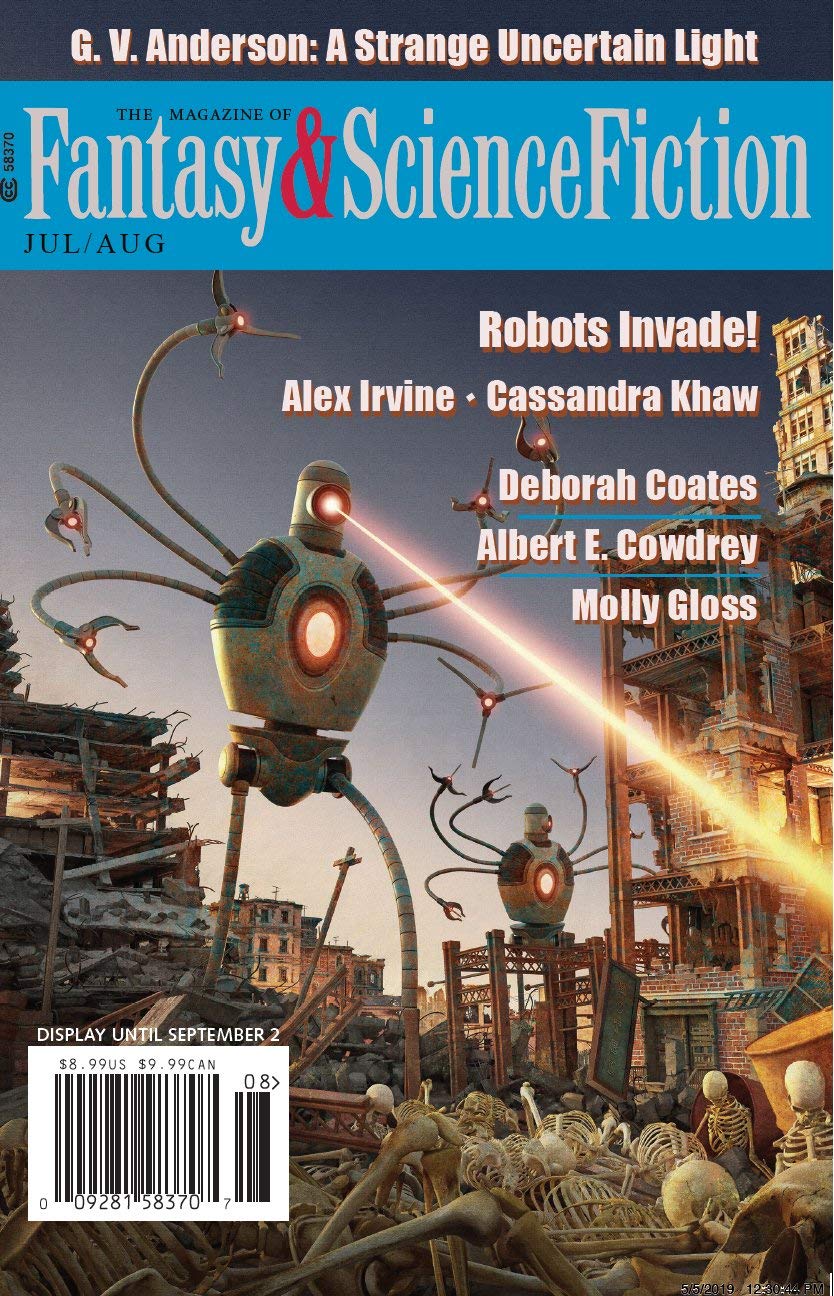
★★★☆☆ Honorable Mention
(Modern Fantasy Mystery; William Warlock) William Warlock’s client inherits a valuable property from a man she never met, but to get it, she has to live there for two years, and there’s something really suspicious about this place. (8,514 words; Time: 28m)
Recommended By: 👍STomaino+1 (Q&A)
Thursday, May 3, 2018
Behold the Child, by Albert E. Cowdrey

★★★☆☆ Honorable Mention
(Psionic; William Warlock) When a crooked lawyer gets hold of a telekinetic 5-year-old and uses him to kill political enemies, the boy’s father engages William Warlock to try to get the boy back. (7,898 words; Time: 26m)
Wednesday, March 8, 2017
The Avenger, by Albert E. Cowdrey

★★★☆☆
(Modern Fantasy; William Warlock) Jeanne hires Mr. Warlock because no normal attorney could cope with the problems her late husband’s crooked relatives are causing her. (10,220 words; Time: 34m)
Recommended By: 👍GDozois.r+1 👍STomaino+1 (Q&A)
Friday, October 28, 2016
The Farmboy, by Albert E. Cowdrey
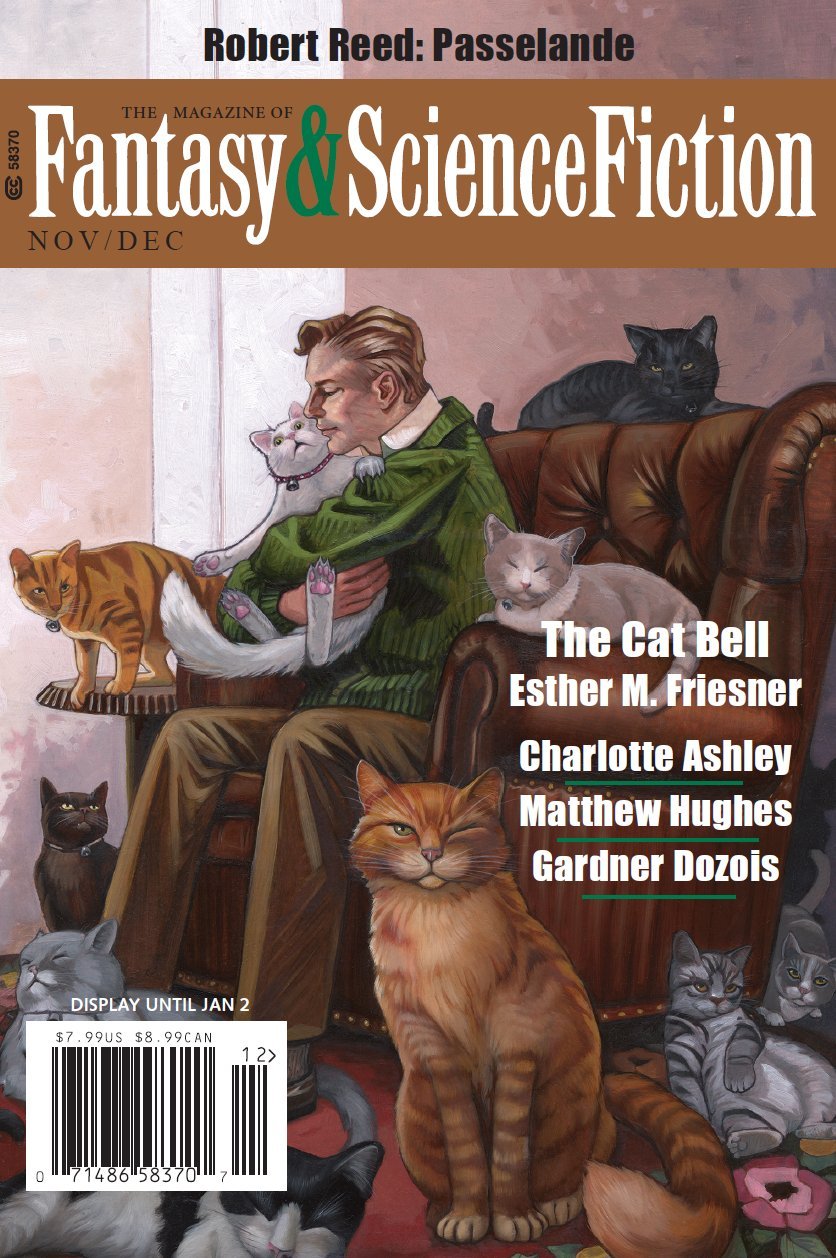
(SF) The crew exploring planet Omega-Alpha are dismayed to see their spaceship take off, leaving them marooned. (8,585 words; Time: 28m)
Rating: ★☆☆☆☆ Needs Improvement
Recommended By: SFRevu:4Thursday, May 19, 2016
Steamboat Gothic, by Albert E. Cowdrey
(Horror) In modern Louisiana, Sheriff Chew investigates a problem with a Hollywood film crew who have gone from being a noise problem to being silent as the grave. (7,455 words)

Rating: 3,
Average
Sunday, January 3, 2016
The Visionaries, by Albert E. Cowdrey

(Urban Fantasy) Jimmy and Morrie's "Paranormal Services" investigates a haunted forest--tree farm, actually. (7,160 words; Time: 23m)
Rating: ★★★★☆, Recommended
Wednesday, October 21, 2015
Portrait of a Witch, Albert E. Cowdrey
The Magazine of Fantasy & Science Fiction, January/February 2015; 7,726 words
Rating: 3, Good, ordinary, story
The FBI forces crooked accountant Alfred to take a job with Lord Pye on a Caribbean tax haven to try to prove Lady Pye is a serial killer.
Rating: 3, Good, ordinary, story
The FBI forces crooked accountant Alfred to take a job with Lord Pye on a Caribbean tax haven to try to prove Lady Pye is a serial killer.
Mini-Review (click to view--possible spoilers)
Pro: Lots of pieces in the story, and they all come together at the end. We're sure early on that Lady Fay's pictures steal souls, but only at the end do we realize it was Lord Pye all along. Cute that "Fay" comes from a word meaning "Fate." "Antenora" is the middle third of the ninth circle of Hell, where those who betrayed their country are frozen in ice.
Con: It's not clear why Lord Pye reveals this info. It's not clear why the US FBI cares in the first place.
Con: It's not clear why Lord Pye reveals this info. It's not clear why the US FBI cares in the first place.
Wednesday, September 30, 2015
The Laminated Man, by Albert E. Cowdrey
The Magazine of Fantasy and Science Fiction, May/June 2015; 7,219 words
Rating: 3, Good, ordinary, story
Rating: 3, Good, ordinary, story
Cairns retired from the FBI at 60 to pursue one, last, mysterious case--off the books.
Mini-Review (click to view--possible spoilers)
Pro: Nice mystery, with plenty of suspense. Quite a surprise at the end, but chillingly effective.
Con: It's not clear why they let the poacher go but killed McPhee. And did they kill the real Carins before they made the copy? It's hard to believe the director would be satisfied with the final resolution because Smiley is still using a fake US Passport.
Con: It's not clear why they let the poacher go but killed McPhee. And did they kill the real Carins before they made the copy? It's hard to believe the director would be satisfied with the final resolution because Smiley is still using a fake US Passport.
Monday, September 7, 2015
The Lord of Ragnarök, by Albert E. Cowdrey
The Magazine of Fantasy & Science Fiction, September/October 2015; 16,843 words
Rating: 4: Recommended
A middle-aged knight in early 13th-Century France bringing his squire (and future master) to meet "The Master of the Tides," reflects on the things he's done, variously brave, cowardly, kind, and horrible, and those he's seen--including the terrifying supernatural thing they're about to visit.
Rating: 4: Recommended
A middle-aged knight in early 13th-Century France bringing his squire (and future master) to meet "The Master of the Tides," reflects on the things he's done, variously brave, cowardly, kind, and horrible, and those he's seen--including the terrifying supernatural thing they're about to visit.
Mini-Review (click to view--possible spoilers)
The story reads extremely smoothly, and manages a good bit of suspense. The descriptions of Mont-Saint-Michel are excellent. This picture shows the dramatic tides that figure in the story.
 Drangø arrives at Mont-Saint-Michel in 1187 or shortly after, given that we know he fought at the battle of Hattin at the end of the crusades. In this story, though, instead of being an abbey, it's the seat of a count.
The largest flaw in the story is Richard's transformation. Up to the point where Richard sets out to attack Grimoire's realm, he has our every sympathy, but as we see how poor the land has become and witness Grimoire's 16-year-old son desperately trying to defend his home, our sympathy for Richard cools. When he murders his young wife and marries Lady Mathilda, we don't recognize him anymore; he has turned into another person entirely.
The problem isn't that it's hard to believe--we have plenty of evidence of what a hard man he has become--but we're sad to see it, and it extinguishes the joy from the story.
The largest flaw in the story is Richard's transformation. Up to the point where Richard sets out to attack Grimoire's realm, he has our every sympathy, but as we see how poor the land has become and witness Grimoire's 16-year-old son desperately trying to defend his home, our sympathy for Richard cools. When he murders his young wife and marries Lady Mathilda, we don't recognize him anymore; he has turned into another person entirely.
The problem isn't that it's hard to believe--we have plenty of evidence of what a hard man he has become--but we're sad to see it, and it extinguishes the joy from the story.
Subscribe to:
Posts (Atom)